
Thailand’s High-Performing Exhibitions Sector Demonstrates Resilience and Growth
Thailand’s exhibitions sector has emerged from the global pandemic not merely recovered, but stronger and more future-ready. While much of the global exhibition industry anticipated a five-year recovery, Thailand achieved full recovery within just three years. By 2025, participation and revenue had reached 135 per cent of 2019 levels, reaffirming the country’s standing as one of Asia’s leading exhibition destinations.
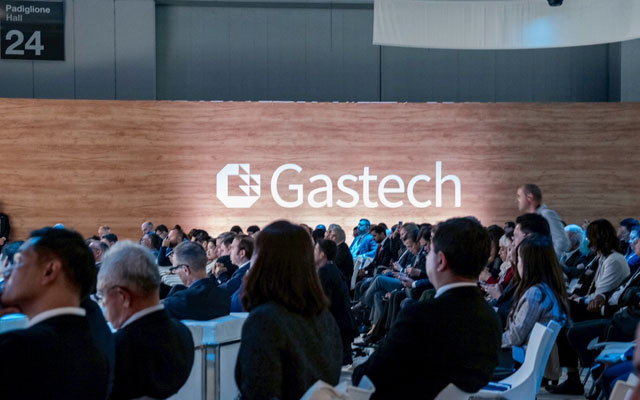
In 2025 alone, Thailand hosted 132 international exhibitions, welcomed 23.6 million participants, and generated approximately US$2.9 billion in exhibition-related revenue. With the largest exhibition space in ASEAN and the fourth largest in Asia, the country combines scale with extensive operational expertise, enabling it to deliver events of genuine global significance.
What truly distinguishes Thailand is its forward-looking approach to exhibition design and experience. Events are evolving beyond traditional trade platforms into strategic marketplaces for innovation, investment and business exchange. Guided by insights from the Thailand Convention and Exhibition Bureau’s (TCEB) MICE Intelligence Center, organisers are rethinking engagement, recognising that participants interact in different ways.
Research indicating that 46 per cent of professionals identify as introverted has influenced the creation of multiple participation pathways, ranging from dynamic networking environments to quieter, focused discussion spaces. Artificial intelligence further enhances the delegate journey through personalised recommendations, intelligent matchmaking and real-time language translation. As a regional hub connecting China, India, the Middle East and South-east Asia, Thailand regularly hosts multilingual audiences, with AI tools turning diversity into a competitive advantage.
Sustainability is deeply embedded within Thailand’s exhibition ecosystem. The country leads ASEAN in Certified Exhibition Management (CEM) professionals and has the highest number of Sustainable Event Professional Certificate (SEPC) graduates in Asia. Through its Eco by Default approach, energy efficiency, waste reduction, carbon measurement and sustainable sourcing are standard practice. Building on this, Circular Intelligence initiatives apply circular economy principles to event design, material reuse and recycling partnerships.
Cultural engagement is also expanding under the Heritage Renewed approach, transforming exhibitions into participatory experiences through culinary workshops, design collaborations and creative exchanges.
Supported by strong government–industry alignment, recognised globally by UFI, Thailand is not only hosting exhibitions but shaping a progressive ecosystem defined by innovation, sustainability, cultural authenticity and collaboration.