

US - Iran Conflict Reshapes Thailand's MICE Landscape, Driving Regional Shift and New Opportunities
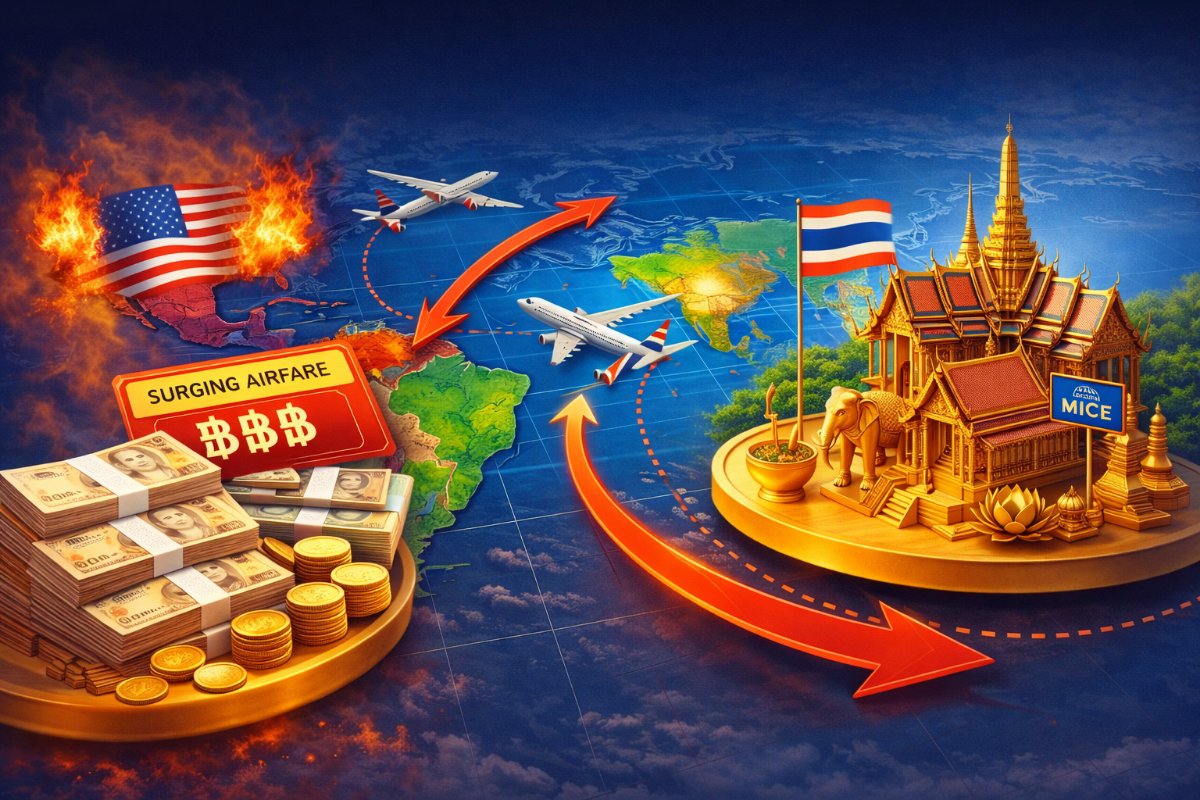
Surging airfares, disrupted flight routes and tighter budgets are pushing global meetings and incentives closer to Asia - positioning Thailand as a key beneficiary.
The ongoing US-Iran conflict is rapidly reshaping the global MICE industry, with Thailand emerging as both a beneficiary and a market under pressure.
One of the most immediate impacts has been on air travel. Disruptions to major Middle Eastern carriers and restricted airspace have significantly reduced capacity on key Europe-Asia routes. As a result, long haul airfares have surged dramatically - by as much as 300% -forcing event planners to rethink logistics, reroute flights, and in some cases, cancel programs altogether. Concerns over safety and escalating costs have made traditional incentive destinations in Europe less viable, particularly for budget-sensitive corporate groups.
In response, many organizations are shifting their focus closer to home. Southeast Asia and Thailand in particular, is seeing a surge in demand as companies seek alternatives that avoid conflict zones while remaining accessible and cost-effective. Thai MICE operators report a sharp increase in enquiries, although shorter lead times are becoming the norm as planners scramble to adapt quickly to changing conditions.
This regional pivot is further reinforced by broader corporate travel trends. Companies are placing greater emphasis on cost control, value-driven experiences, and employee wellbeing. As a result, destinations that combine business infrastructure with leisure appeal - commonly referred to as “bleisure” - are gaining traction. Thailand's diverse offerings, from established hubs like Bangkok to resort destinations such as Phuket and Koh Samui, position it strongly within this trend.
Cost competitiveness remains a critical advantage. Asia continues to offer significantly lower overall travel expenses compared to global averages, allowing companies to maintain MICE activities despite economic uncertainty. Savings on travel and accommodation are often redirected into enhanced on-ground experiences, making programs more attractive without increasing budgets.
At the same time, strong regional aviation networks and high flight occupancy rates across Asia are helping sustain intra-regional travel, even as global connectivity faces disruption. Markets such as China and India, supported by extensive domestic capacity, are expected to play an increasingly important role in driving MICE demand within the region.
Despite the challenges, industry sentiment remains cautiously optimistic. While the conflict represents the most significant disruption since the pandemic, it has also accelerated a structural shift towards regionalization. For Thailand, this presents a strategic opportunity to strengthen its position as a leading MICE destination in Asia.
Ultimately, while global uncertainty continues, one principle remains unchanged: business must go on—only now, it is finding new routes, new destinations, and new opportunities closer to home.